

Some children need cavity care before they are ready for a filling. A toddler may not sit still long enough for restorative treatment, and an anxious child may feel upset by drills or shots. Silver Diamine Fluoride Treatment (SDF) can help manage certain cavities with a quick brush-on liquid.
Starlet Kids Dentistry provides Silver Diamine Fluoride Treatment (SDF) for children in Pacoima, CA. Dr. Golshid Shakouri Partovi and the team use a gentle approach, clear parent guidance, and careful follow-up to help protect young smiles.
Silver Diamine Fluoride Treatment (SDF) is a topical liquid used to help stop active tooth decay. It is placed directly on the decayed area of the tooth. The process is short and does not require drilling, local anesthesia, or a long visit in the dental chair.
SDF contains silver and fluoride. Silver helps fight the bacteria that are active inside the cavity. Fluoride helps strengthen weakened enamel and tooth structure. Together, these ingredients help slow or stop the decay process.
SDF is often used for young children, children with dental anxiety, children with special care needs, or children who need decay control before another treatment can be completed. It may also be used when a dentist wants to control decay before a future filling or crown.
This treatment does not rebuild missing tooth structure. It can help control decay, but it does not fill a hole or restore the tooth’s shape. Some children may still need a filling, crown, or other care later. Dr. Partovi will explain what SDF can do for your child’s tooth and what follow-up care may be needed.
SDF can be useful when a cavity needs treatment, but standard restorative care is difficult at that time. It gives the dental team a way to manage active decay while keeping the visit simple for the child.
A cavity can grow deeper when bacteria continue to weaken the tooth. If decay reaches the nerve area, the tooth may become painful or infected. SDF is applied to the decayed area to help stop the cavity from progressing. Dr. Partovi will check the tooth at future visits to see how it responds.
Very young children may not be ready for a filling. They may move, cry, or become frightened during longer treatment. SDF can be placed quickly. This can help manage a cavity while the child grows and becomes more comfortable with dental care.
Some children are scared of dental tools, even before treatment begins. The sound of a drill or the idea of a numbing shot can make care feel overwhelming. SDF is brushed onto the tooth. Most children can complete the application without drilling or numbing, which may make the visit easier to tolerate.
Fluoride helps support tooth structure that has been weakened by acid and bacteria. This can make the treated area more resistant to further breakdown. SDF works best with good home care. Brushing, regular dental visits, and fewer sugary drinks can help protect treated teeth and reduce the risk of new cavities.
A cavity in a child’s tooth can continue to grow if it is not managed. The decay may spread deeper into the tooth and reach the sensitive inner area. This can lead to pain, swelling, infection, or an abscess. Children may not always explain tooth pain clearly. Parents may notice changes such as trouble eating, chewing on one side, waking at night, or avoiding brushing near one tooth. A cavity can affect daily comfort before a child knows how to describe the problem.
If decay becomes severe, the tooth may need more involved care. A filling, crown, pulp treatment, or removal may be needed if the damage goes too far. SDF may help control certain cavities earlier, especially when a child is not ready for a traditional filling.
Dr. Partovi can examine your child’s tooth and explain whether SDF is the right choice or if another treatment is needed.
Starlet Kids Dentistry provides SDF in a calm pediatric setting. The appointment is usually short, and the team explains each step so parents know what to expect.
The visit begins with a dental exam. Dr. Partovi checks the cavity, tooth structure, gums, and any symptoms your child may have. Digital images may be reviewed if more information is needed. Parents can ask about the purpose of SDF, the expected tooth color change, and possible future treatment. Dr. Partovi will explain whether SDF is appropriate for the tooth.
SDF turns the decayed part of the tooth dark. This color change happens as the liquid reacts with the cavity. Healthy enamel around the cavity is not usually affected in the same way. The dark color is expected and can be permanent on the treated decay. Dr. Partovi explains this before treatment so parents understand the appearance change.
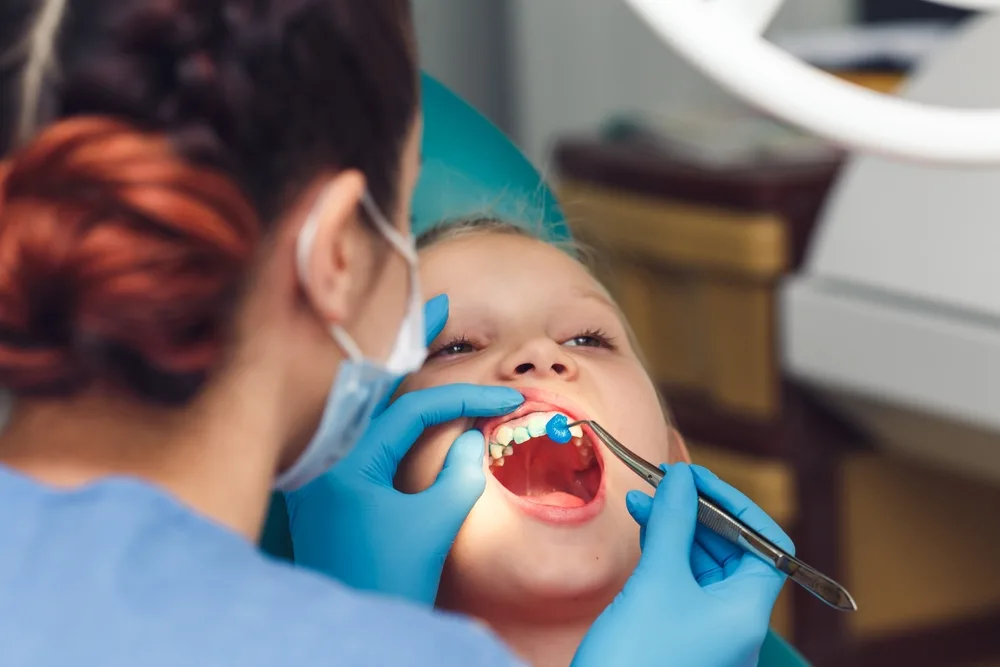
The tooth is dried before the liquid is applied. Dr. Partovi uses a small brush to place SDF directly on the decayed area. The liquid stays on the tooth briefly so it can soak into the cavity.
The application is painless and quick. Your child does not have lingering numbness afterward because anesthesia is not usually used.
Your child may need to avoid eating or drinking for a short time after the visit. The team will explain timing before you leave. Follow-up care is important. Some teeth may need another SDF application, and some may need a filling or crown later. Dr. Partovi will recommend a schedule based on the tooth, cavity size, and your child’s needs.
Parents want cavity care that respects a child’s age, comfort, and dental needs. Starlet Kids Dentistry provides pediatric care with gentle techniques, clear explanations, and practical support for families.
SDF can help manage certain cavities without drilling. This can be helpful when a child is not ready for a filling or when the goal is to control decay first. Dr. Partovi checks each tooth before recommending SDF. The treatment plan depends on the tooth, the cavity, and your child’s ability to tolerate care.
Some children need shorter, simpler visits. SDF is often easier for young or nervous children because the liquid is placed quickly. The team uses patient communication and a gentle pace to help children feel supported during the appointment.
SDF can help stop decay, but it darkens the treated cavity. Parents should know this before treatment begins. Dr. Partovi explains the benefits, limits, and possible next steps so families can make an informed choice about their child’s care.
Dr. Partovi speaks English, Spanish, and Farsi. This helps families ask questions, review care options, and understand home instructions more clearly. Clear communication helps parents feel prepared before and after their child’s SDF visit.
Silver Diamine Fluoride Treatment (SDF) may help children with certain cavities receive care without drilling, numbing shots, or a long appointment. It can be helpful for toddlers, anxious children, and children who need decay control before future treatment.
Starlet Kids Dentistry provides Silver Diamine Fluoride Treatment (SDF) for children in Pacoima, CA, with gentle care and clear parent guidance. Book your child’s Silver Diamine Fluoride Treatment (SDF) in Pacoima, CA with Starlet Kids Dentistry today.
SDF is used to help stop active tooth decay in certain teeth. It is a liquid that is brushed onto the cavity without drilling.
No. SDF is usually painless. The liquid is applied with a small brush, and numbing is not usually needed.
The decayed part of the tooth turns dark as the SDF reacts with the cavity. This color change is expected and is part of how the treated area looks afterward.
SDF can help stop decay, but it does not rebuild the missing part of the tooth. Some children may still need a filling, crown, or other treatment later.
SDF may be helpful for toddlers with certain cavities, especially when they are not ready for a traditional filling. Dr. Partovi will check the tooth first.
The application itself is quick. The visit may take longer if Dr. Partovi needs to examine other teeth, review images, or answer parent questions.
Your child may need to wait for a short time before eating or drinking. The team will give you instructions after the application.
Some teeth may need repeat applications. Dr. Partovi will recommend follow-up timing based on your child’s cavity, tooth location, and decay risk.
Still have questions? Reach out now
Call Starlet Kids Dental at (818) 334-5572 for more information on booking an appointment, or fill out the form below and we will reach out to you!