

Growing smiles change quickly. Baby teeth fall out, adult teeth come in, and the bite may begin to show crowding, spacing, or jaw alignment concerns. Orthodontics can help guide these changes so that teeth fit together in a healthier way.
Starlet Kids Dentistry provides Orthodontics for children and teens in Pacoima, CA. Dr. Golshid Shakouri Partovi and the team review tooth position, bite balance, jaw growth, and treatment timing to help families choose care that fits the child’s needs.
Orthodontics focuses on how the teeth and jaws line up. Treatment may move teeth into better positions, improve the way the bite comes together, close spaces, create room for crowded teeth, or guide jaw development during growth.
Children do not always need braces as soon as an alignment concern appears. Some children need early observation so the dentist can watch how adult teeth are coming in. Some may need early treatment to guide growth or reduce a problem before it becomes harder to manage. Teens may be ready for braces, clear aligners, or another orthodontic option once more permanent teeth are present.
Orthodontic care can help with overbites, underbites, crossbites, open bites, crowded teeth, rotated teeth, spacing, and certain jaw growth patterns. Treatment works by placing controlled pressure on the teeth over time. As the teeth move, the bite can become easier to clean, more comfortable for chewing, and more balanced.
Dr. Partovi uses the evaluation to explain what is happening in your child’s mouth and what options may be appropriate. Parents receive a clear plan for timing, expected treatment length, home care, and follow-up visits.
Some alignment concerns are easy for parents to notice. Others are found during a dental exam or imaging. Orthodontic care may be recommended when tooth position or bite function could affect comfort, cleaning, or long-term dental health.
A healthy bite allows the upper and lower teeth to meet in a stable way. If the bite is off, some teeth may carry more pressure than others. A child may have trouble biting into foods, chewing evenly, or closing the mouth comfortably.
Orthodontics can help improve the way the bite fits. This may reduce uneven tooth wear and help the jaws work more comfortably as the child grows.
Crowding can cause teeth to overlap or come in at an angle. These tight areas can hold plaque and food, even when a child brushes daily. Flossing can also become harder when teeth are crowded. Straightening crowded teeth can make daily cleaning easier. Better access for brushing and flossing may help lower the risk of cavities and gum irritation in areas that were once hard to reach.
Spaces between teeth may happen for several reasons, including tooth size, jaw size, missing teeth, habits, or normal growth. Some gaps close naturally, while others remain as more adult teeth come in.
Orthodontic treatment can close spaces when needed and help teeth sit in a more stable position. Dr. Partovi can explain if a gap should be monitored or treated based on your child’s age and dental development.
Children and teens may feel sensitive about crooked teeth, crowded teeth, or gaps. A child may cover their mouth when smiling or feel uncomfortable in photos. Orthodontic care can improve the look of the smile while also supporting function. A child who feels better about their teeth may feel more comfortable speaking, laughing, and smiling around others.
Some orthodontic concerns remain mild and do not need active treatment. Other concerns may become more complicated without monitoring. A dental evaluation helps parents know which category their child falls into.
Crowded teeth can make oral hygiene harder, which may raise the risk of tooth decay and gum inflammation. Bite problems can place extra stress on certain teeth, leading to wear, sensitivity, or jaw discomfort. A crossbite may affect jaw growth if it remains untreated during important growth years.
Early evaluation does not always lead to immediate treatment. It gives families better information about timing and helps Dr. Partovi recommend care before problems become more involved.
Starlet Kids Dentistry provides orthodontic evaluation and treatment guidance in a child-focused dental setting. The goal is to understand your child’s bite, explain the options clearly, and support the family during the full process.
The visit begins with an exam of your child’s teeth, bite, gums, and jaw growth. Digital images may be used to check tooth roots, teeth below the gums, bone structure, and spacing for adult teeth.
Parents can share concerns about crowding, gaps, chewing, speech, thumb sucking, mouth breathing, or smile appearance. Dr. Partovi will explain what she finds and whether your child needs monitoring, early treatment, braces, aligners, or another option.
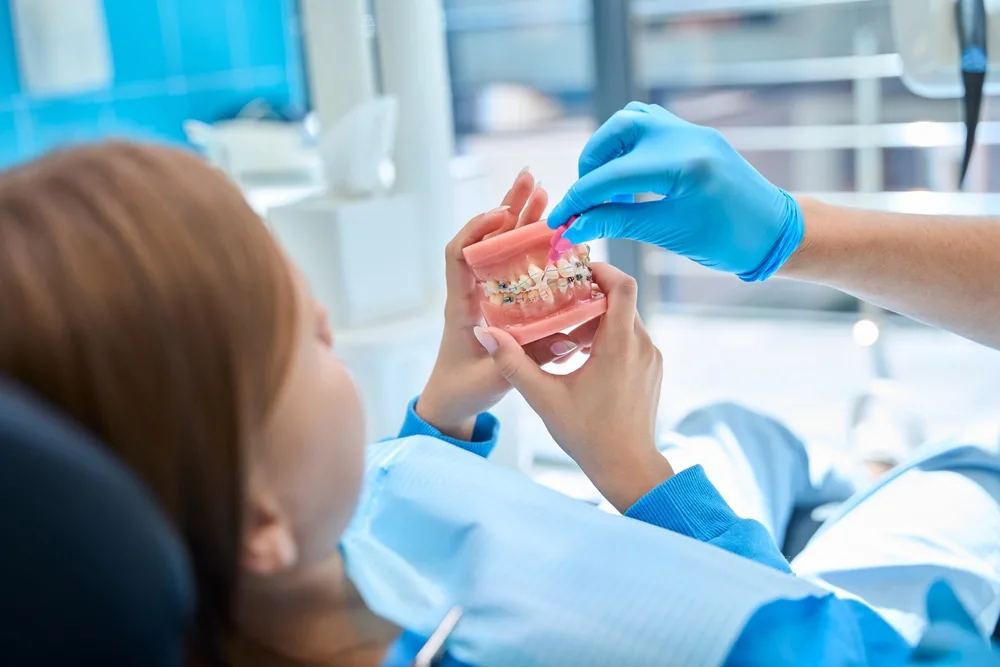
Traditional braces may be used when a child needs detailed control of tooth movement. Brackets and wires guide the teeth over time and can correct many types of alignment and bite concerns. Lingual braces may be an option for some patients because the brackets are placed behind the teeth. Invisalign clear aligners may also be an option for responsible teens who can wear them for the required hours each day. Dr. Partovi will explain which choices fit your child’s age, bite, and treatment needs.
Orthodontic care works best when the plan fits the child’s needs and routine. Dr. Partovi discusses the expected timeline, visit schedule, food limits, cleaning needs, and how soreness may feel after adjustments or new aligners. Children with braces need to avoid certain hard or sticky foods that can damage brackets. Teens with aligners need to remove them for eating and keep track of them carefully.
After braces or aligners are finished, retainers help hold the teeth in their new positions. Teeth can slowly move if retainers are not worn as directed. Dr. Partovi explains how to wear the retainer, how to clean it, and when follow-up visits are needed. Retainer care is an important part of keeping orthodontic results stable over time.
Families need orthodontic care that is careful, practical, and easy to understand. Starlet Kids Dentistry helps parents make informed choices about timing, treatment options, and home care during orthodontic treatment.
Dr. Partovi looks at growth, tooth eruption, bite position, and oral habits before recommending treatment. Some children need treatment early. Others benefit from waiting until more adult teeth come in. This planning helps families avoid rushing into treatment before the right time while still addressing concerns that may need attention.
Children and teens do not all need the same type of orthodontic care. Some need traditional braces for more complex movement. Some may qualify for clear aligners. Some need monitoring before active treatment starts. The team explains the strengths and limits of each option, so parents understand what is realistic for their child.
Brushing and flossing can be harder during orthodontic treatment. The team teaches children how to clean around brackets, wires, or aligners. Parents also receive tips for food choices, mouthguards, soreness, and retainer routines. Good home care helps protect the teeth while they are being moved into better positions.
Dr. Partovi speaks English, Spanish, and Farsi. This helps families ask questions and review treatment steps in a language they are comfortable using. Clear communication can make orthodontic care feel easier, especially when parents are comparing braces, aligners, timelines, and costs.
Orthodontics can help children and teens improve tooth alignment, bite balance, brushing access, and smile confidence. A careful evaluation can show if your child is ready for treatment or should be monitored as the mouth continues to grow.
Starlet Kids Dentistry provides Orthodontics for children and teens in Pacoima, CA, with careful planning and clear family guidance. Book your child’s orthodontic consultation in Pacoima, CA with Starlet Kids Dentistry today.
Many children should have an orthodontic check around age seven. This visit helps Dr. Partovi see how the teeth and jaws are developing, even if treatment is not needed yet.
No. Some mild crowding or spacing may only need monitoring. Dr. Partovi can explain if your child needs treatment now, later, or not at all.
Teens may be candidates for traditional braces, lingual braces, or Invisalign clear aligners. The right choice depends on the bite, tooth movement needs, and how well the teen can follow care instructions.
Many orthodontic treatments take 12 to 24 months. The timeline can be shorter or longer depending on the case, the appliance used, and how well instructions are followed.
Yes. Orthodontics can help with overbites, underbites, crossbites, open bites, and other bite concerns. Dr. Partovi will check your child’s bite during the evaluation.
Children with braces should avoid hard, sticky, or chewy foods that can break brackets or bend wires. The team will give specific food guidance before treatment begins.
Clear aligners are not right for every child. They work best for responsible patients who can wear them as directed and keep track of them when removed.
Your child will need a retainer after treatment. The retainer helps hold the teeth in their new positions and lowers the chance of teeth moving back.
Still have questions? Reach out now
Call Starlet Kids Dental at (818) 334-5572 for more information on booking an appointment, or fill out the form below and we will reach out to you!